Shelter · Deck
Open source · DPG certification in progress with UNICEF · ISO/IEC 27001
Shelter — we get value to anyone, and you see it in real time
by Xcapit
Money, aid or resources to whoever needs them — no bank account, no smartphone, no internet — with real-time reporting and visibility of every delivery.
Shelter · Deck
SMS wallet
Works on any basic phone
Beneficiaries do not need a smartphone, an app or internet access.
- No smartphone
- No internet
- No bank account
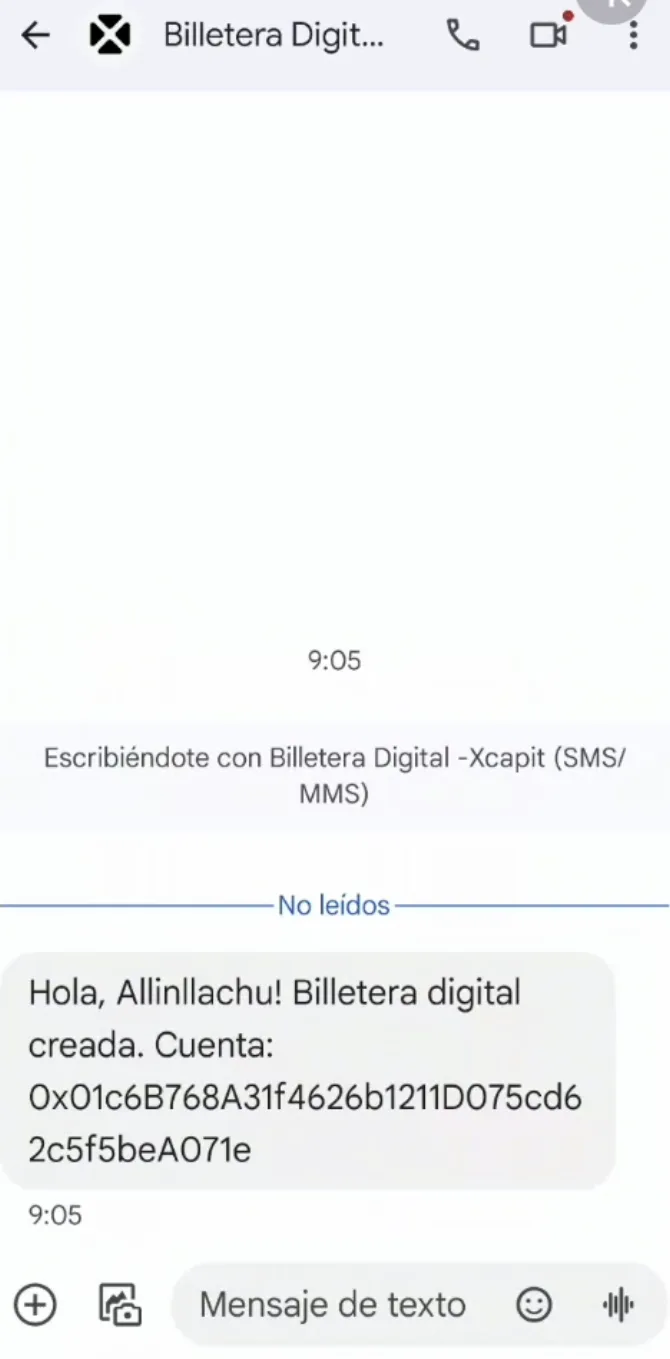
- Account abstraction on Polygon: the wallet is tied to the phone number, with no private keys for the user to manage.
- Create a wallet, check a balance, send and receive stablecoins by text message.
- Pay at shops with a one-time passcode (OTP) confirmed by SMS.
- Messages in the local language, including Quechua in Peru.
Shelter · Deck
Platform
Rules, delivery, tracking and reporting in one platform
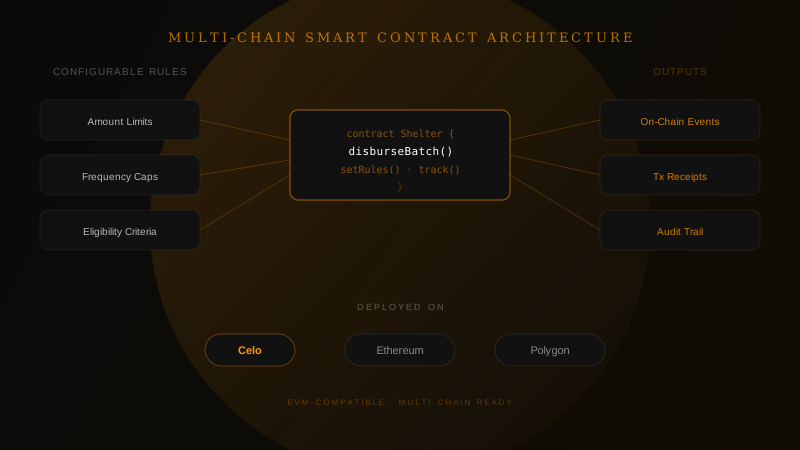
- 01Configurable disbursement rules
- 02Multi-chain settlement
- 03Real-time tracking
- 04Beneficiary verification
- 05Last-mile delivery
- 06Compliance and reporting
Multi-chain
EVM networks
Solidity
Stellar
Soroban
Cardano
Aiken
Shelter · Deck
Field pilots
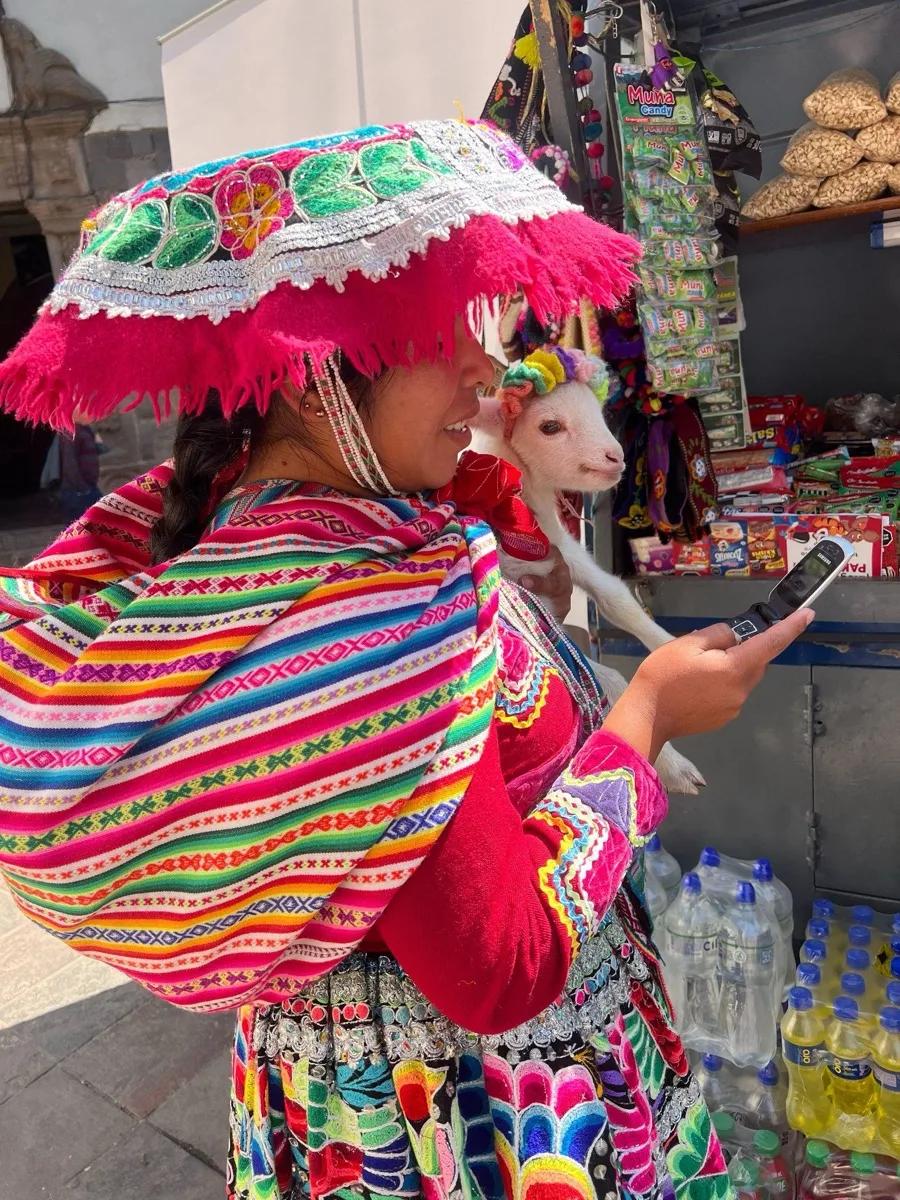
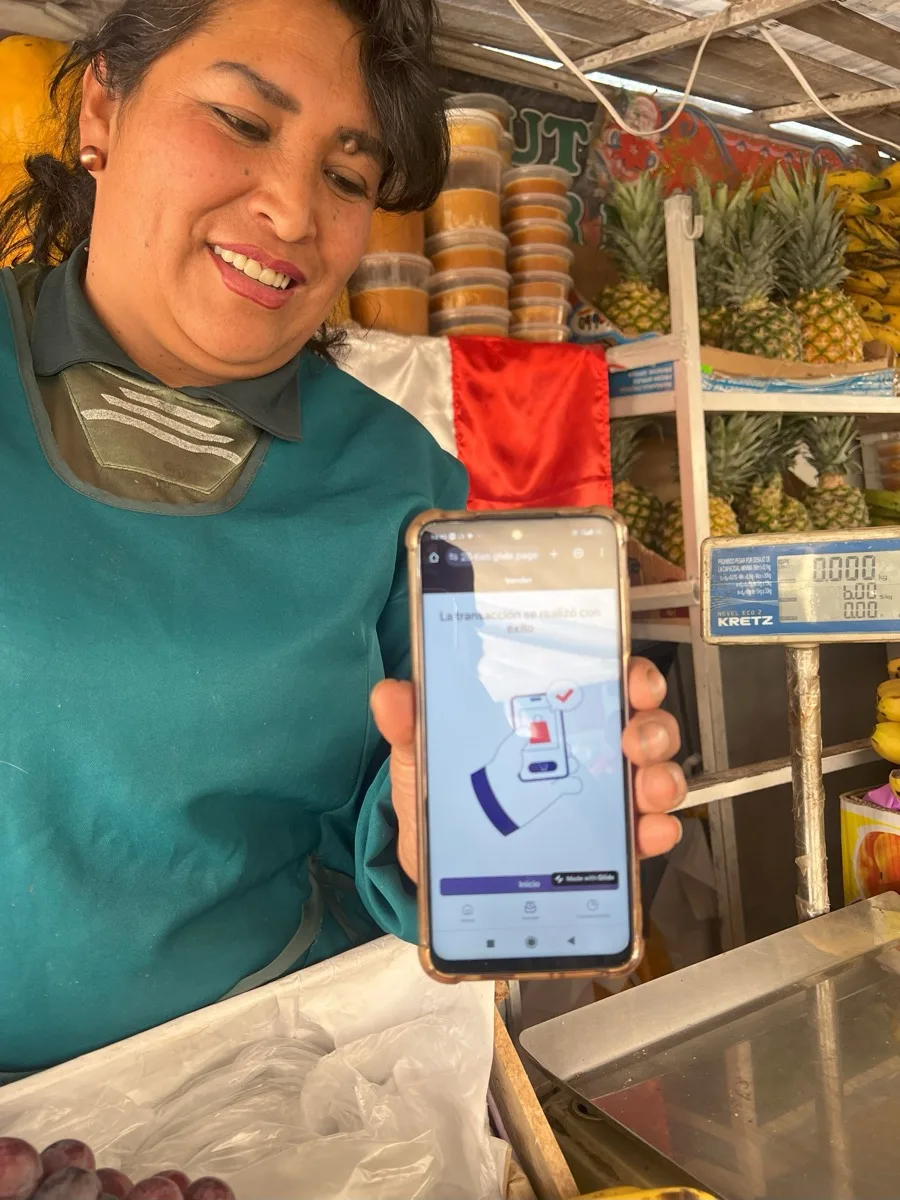
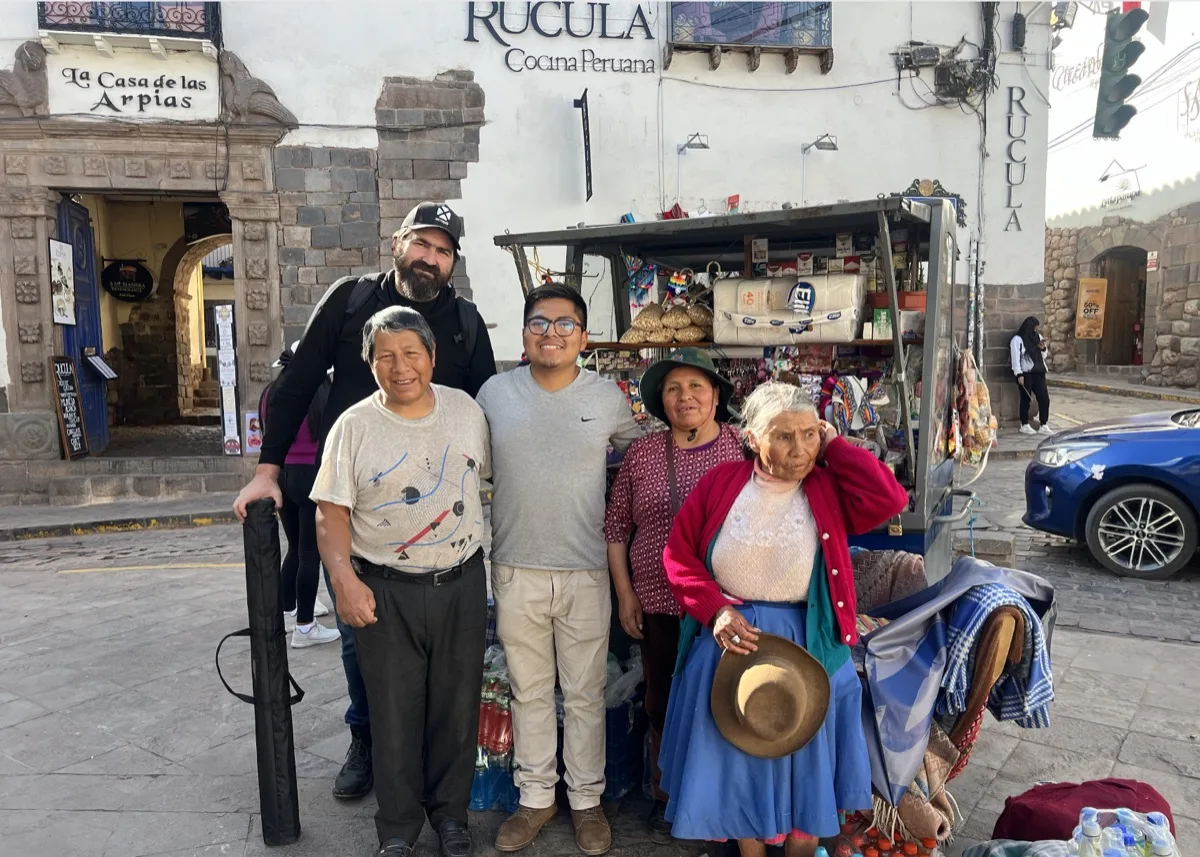
Cusco, Peru · August 2024
Real purchases with an SMS wallet in Quechua
A first field test of the SMS wallet with real purchases in the Plaza de Armas and local markets, with wallet messages in Quechua.
- purchases
- 10
- success rate
- 100%
- total in USDT/USDC
- $18.25
- per purchase (gas + SMS)
- ~$0.27
Smallest purchase: $0.10, proving micro-payments work.
Shelter · Deck
Field pilots
Cusco, Peru · 2024 · UNICEF Venture Fund
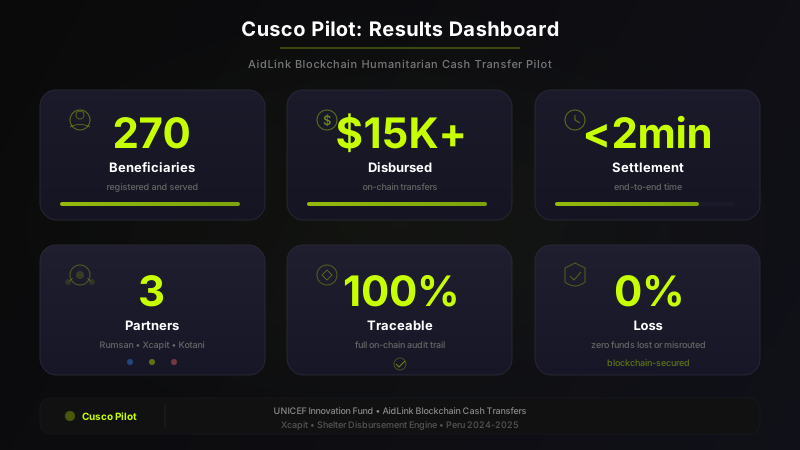
270 beneficiaries and 100% of funds in the wallets
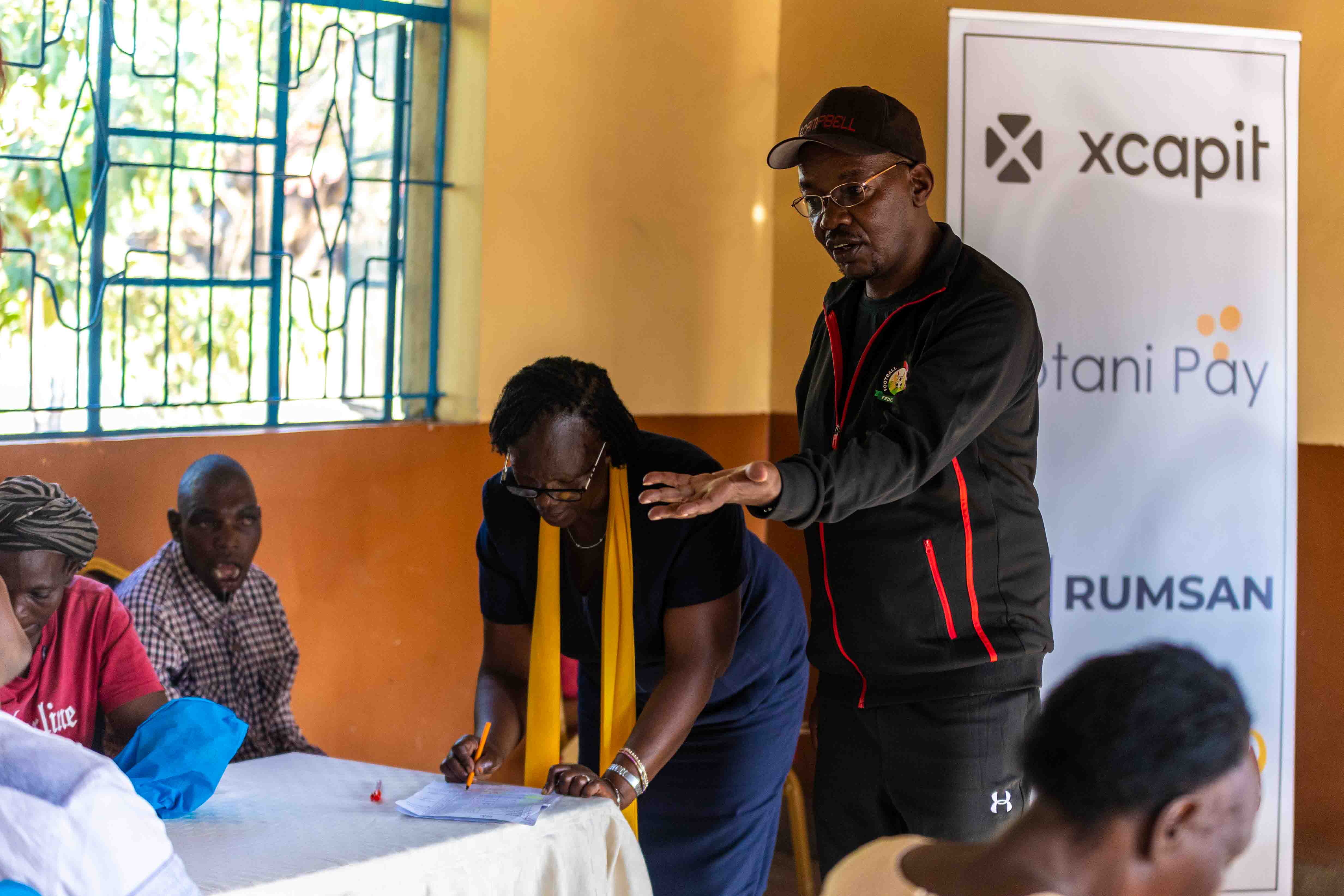
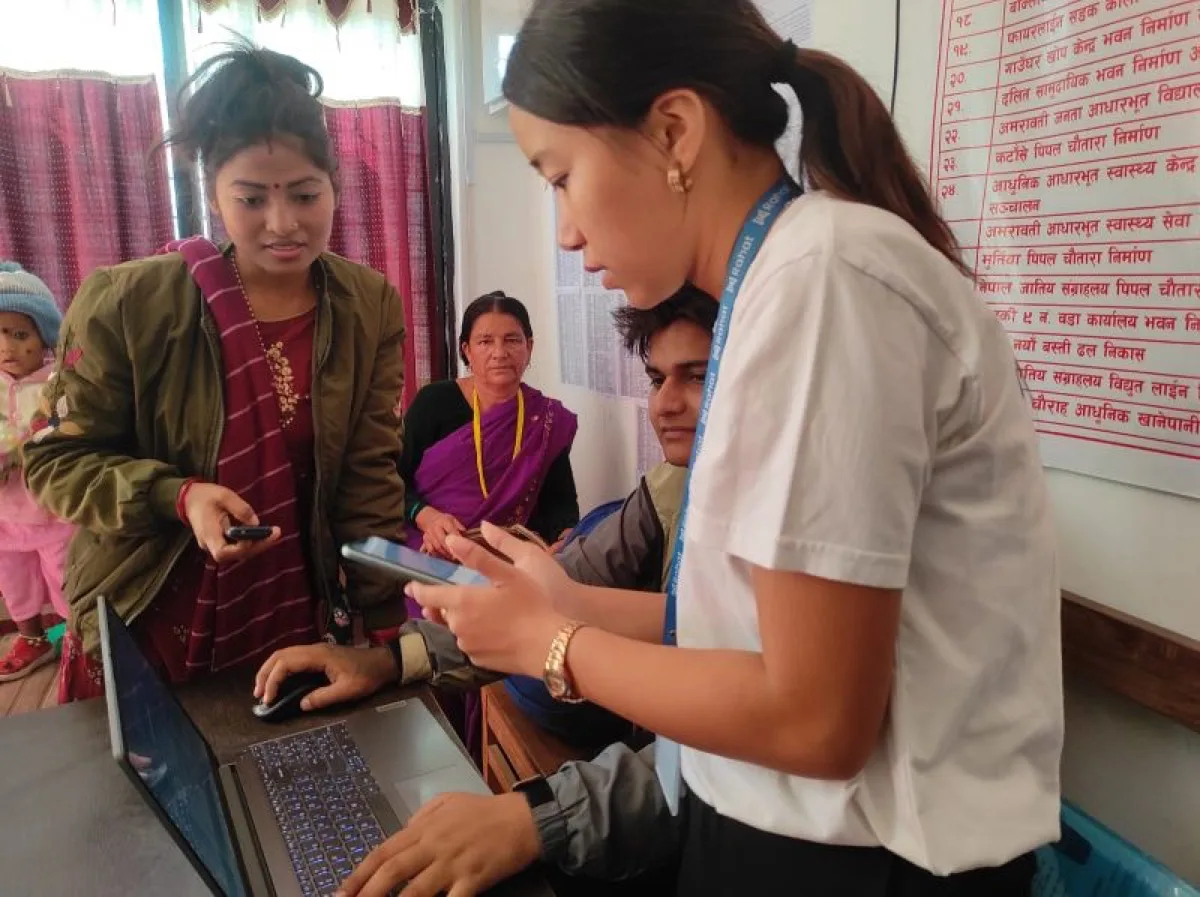
Shelter in the AidLink pilot, with consortium partners Rumsan (beneficiary registration and blockchain infrastructure) and Kotani Pay (conversion to local-currency mobile money), operated by a local NGO after a 2-hour training.
- beneficiaries
- 270
- distributed
- $15,000+
- on-chain settlement
- < 2 min
AidLink consortium
- Rumsan — Consortium partner of the AidLink pilot: beneficiary registration and blockchain infrastructure
- Kotani Pay — Consortium partner of the AidLink pilot: conversion to local-currency mobile money
Shelter · Deck
Field pilots
Greater Nairobi, Kenya · December 2025 · UNICEF Venture Fund
USDC over SMS, cashed out to M-Pesa
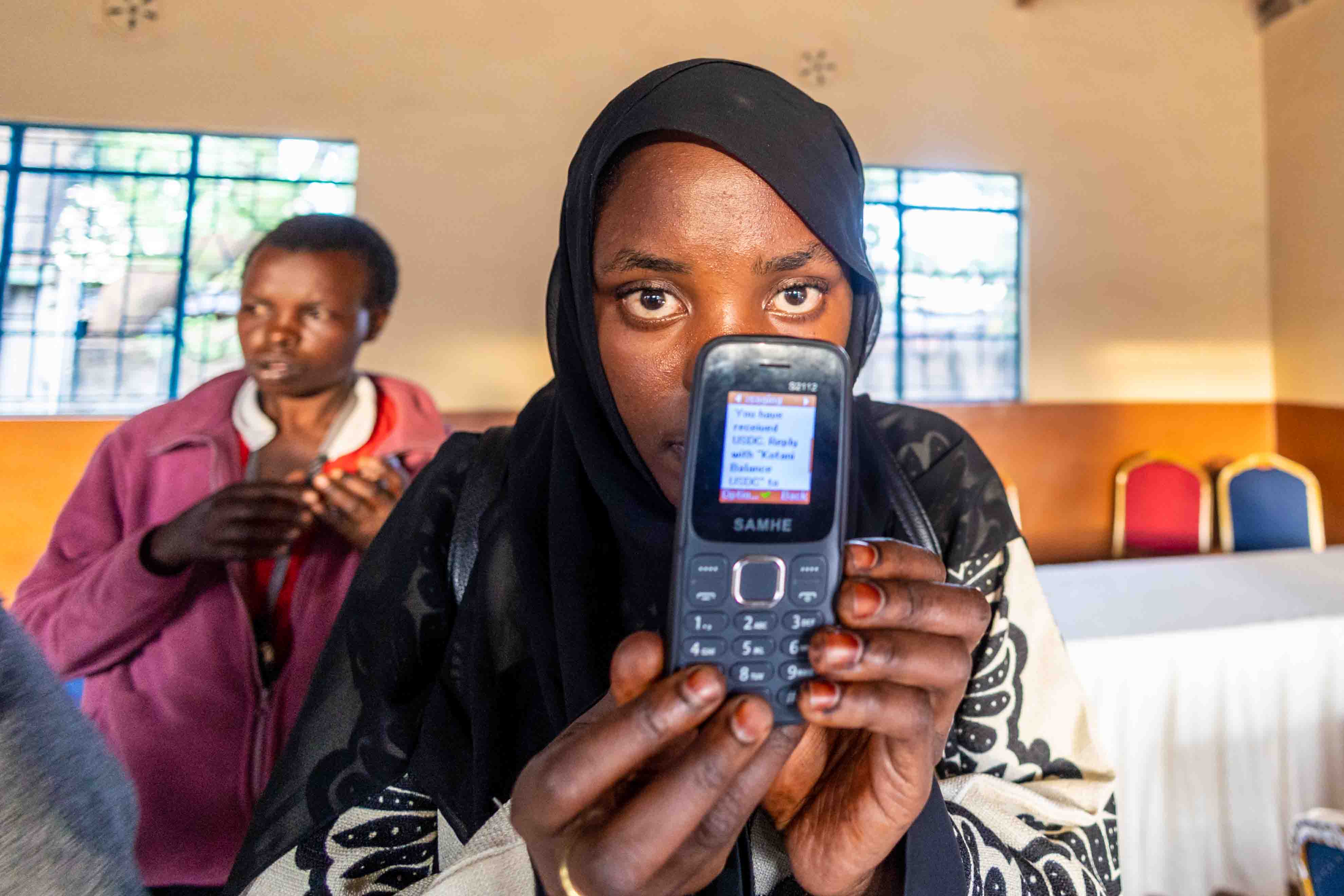
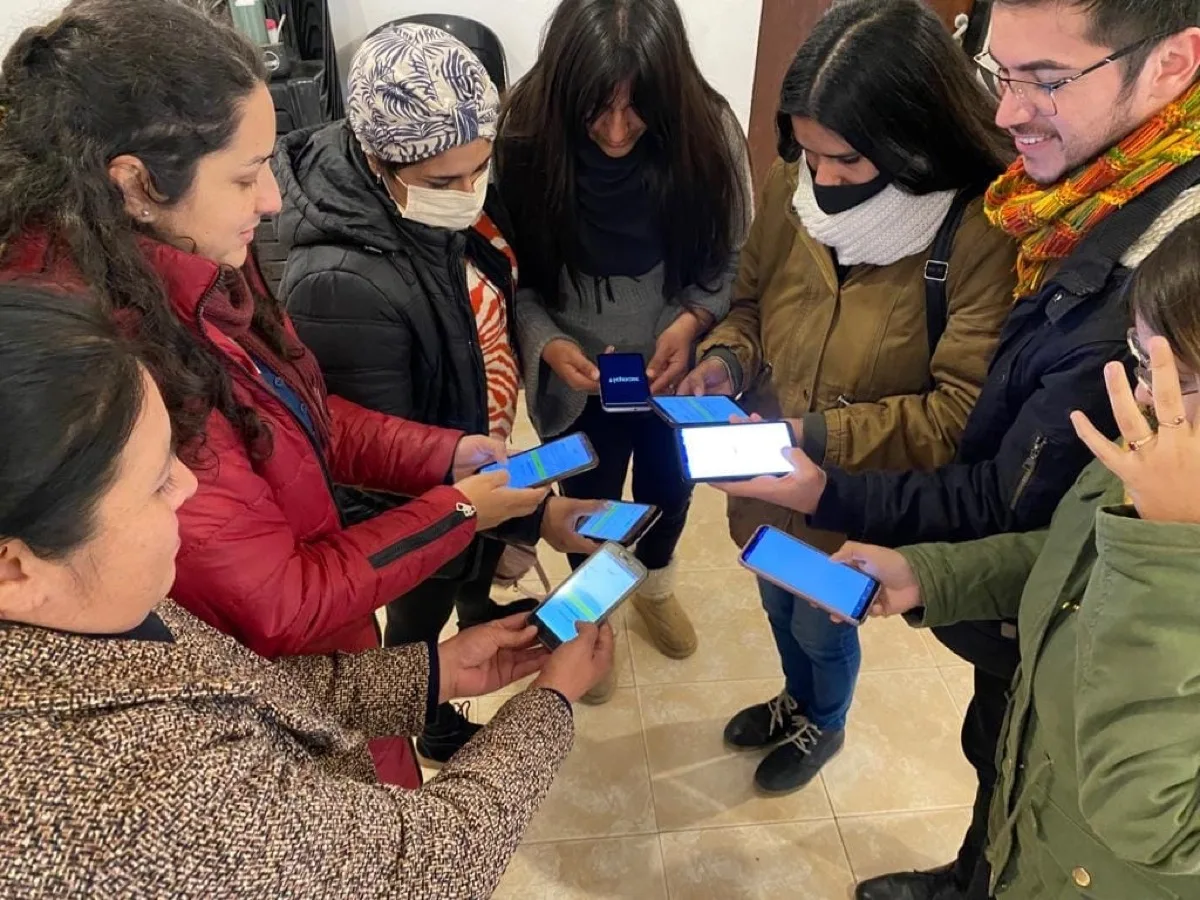
49 people with intellectual disabilities, identified by Advantage Africa, received USDC by SMS wallet and cashed out to M-Pesa. The UNICEF Venture Fund published the results on 10 March 2026.
- beneficiaries
- 49
- each
- 65 USDC
- disbursed and off-ramped
- 100%
- seamless, avg. 19 min
- 79.6%
AidLink consortium
- Rumsan — Consortium partner of the AidLink pilot: beneficiary registration and blockchain infrastructure
- Kotani Pay — Consortium partner of the AidLink pilot: conversion to local-currency mobile money
- Advantage Africa — Beneficiary identification in Kenya
Shelter · Deck
Greater Nairobi, Kenya · December 2025 · UNICEF Venture Fund
Under 2 minutes on-chain, 19 minutes to M-Pesa
Speed
A note on speed: on-chain settlement takes under 2 minutes. The full cash-out to M-Pesa in Kenya averaged 19 minutes, with 79.6% of transfers (39 of 49) completing seamlessly and the fastest in 1 minute.
Why there were delays
Delays came from RPC outages and a temporary KES liquidity shortage.
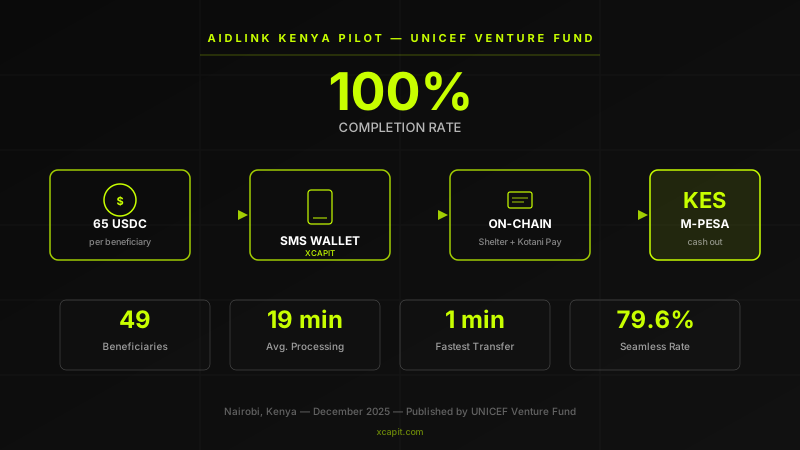
“Operating in real humanitarian settings highlighted challenges related to infrastructure, connectivity, and coordination. These experiences reinforced that technology must remain simple, flexible, and context-aware.”
Shelter · Deck
Field pilots
Caracas, Venezuela · April 2026 · UNICEF Venture Fund
Direct aid to 30 Fe y Alegría educators
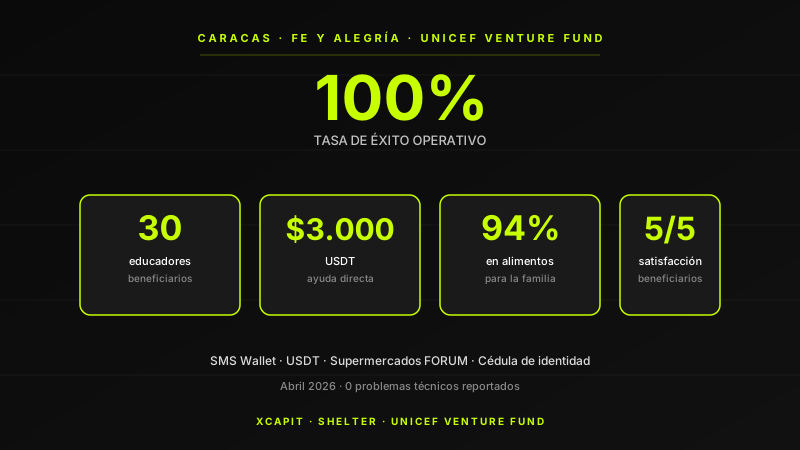
30 educators from the Virginia de Ruiz II school received $100 USDT each (total $3,000) in wallets created by SMS and redeemed them at FORUM supermarkets with their national ID.
- educators
- 30
- in USDT
- $3,000
- spent on food
- 94%
“Walking through the FORUM aisles, I saw the joy on my colleagues' faces. Many were able to save the money they had set aside for food and finally buy something else.”
Pilot partners
- Fe y Alegría — Pilot partner in Caracas
- FORUM — Supermarket redemption in Caracas
Shelter · Deck
Results
Three countries, 100% of deliveries completed
- purchases · Cusco, Peru, August 2024
- 10
- beneficiaries · Cusco, Peru, 2024
- 270
- beneficiaries · Greater Nairobi, Kenya, December 2025
- 49
- educators · Caracas, Venezuela, April 2026
- 30
What we learned
- Micro-payments work: the smallest purchase in Cusco was $0.10.
- A local NGO ran the AidLink pilot in Cusco after 2 hours of training.
- In Kenya: add USSD, simplify SMS commands and pre-fund the off-ramp.
- In Caracas, 63% completed the redemption in a single visit.
Shelter · Deck
Track record
Since 2018, taking technology where infrastructure doesn't reach
- 2018Xcapit was founded in 2018 by José Trajtenberg and Fernando Boiero.
- 2020Selected by the UNICEF Innovation Fund (now UNICEF Venture Fund).
- 2024The Xcapit Wallet, built with UNICEF Venture Fund investment, was recognized as a Digital Public Good by the DPGA in May 2024. DPG registry (opens in a new tab)
- Dec 2024UNICEF Venture Fund mid-investment update, with USD 314,829 in growth funding for the humanitarian-aid platform.
- Feb 2026UNICEF Innovation published a story on the AidLink results from Nairobi: 49 participants received USDC by SMS on basic phones and cashed out to M-Pesa.
4M+
people reached with the wallet built with UNICEF
167+
countries with users
Xcapit Wallet only
The 4M+ people and 167+ countries refer to the Xcapit non-custodial wallet, backed by UNICEF.
Shelter · Deck
Track record
What UNICEF and our team say
Congratulations to Xcapit for their excellent work. Their technology is bringing digital assets closer to those who need them most, helping UNICEF Innovation bring the benefit of technology to the last mile.
 Shane O'ConnorInnovation Manager, UNICEF
Our solution ensures that aid reaches the right hands, on time, and in the right way.
Shelter · Deck
Trust
Full transparency over funds, full privacy over people
Open source
The core disbursement engine and smart contracts are open source.
Digital Public Good
Digital Public Good certification in progress with UNICEF.
ISO/IEC 27001
Xcapit holds ISO/IEC 27001 certification (IRAM / IQNet).
No personal data on-chain
Names, phone numbers and other personally identifiable information are never stored on-chain.
Public dashboard
Every disbursement is recorded on-chain and can be audited on a public Dune dashboard.
Backed by
- UNICEF Venture Fund — Funder and backer of the Shelter pilots
- Stellar Development Foundation — Backer of Shelter
Shelter · Deck
Who it's for
Who Shelter is for
Humanitarian organizations
Distribute emergency aid, cash transfers and vouchers with full traceability and donor accountability.
Government agencies
Deliver social subsidies, conditional cash transfers and incentive programs with transparent disbursement and anti-fraud controls.
Companies
Manage employee benefits, CSR programs and community investment funds with automated distribution and compliance reporting.
What you can distribute
- USDC
- USDT
- cUSD (Celo)
- Voucher tokens
- Conditional transfers
With rules: Eligibility, amounts, schedules and restrictions, encoded in smart contracts. Funds earmarked for a defined purpose when the program requires it.

Shelter · Deck
Tell us what you need to deliver, and to whom.
Tell us about your program and we'll see whether Shelter, or something like it, fits.
Write to us: hola@xcapit.com
calendly.com/jose-xcapit/30min
Shelter's public page: www.sheltertech.io/en/soluciones/shelter
Xcapit INC (USA) · CryptoLab S.A.S. (Argentina) · Xcapit SAC (Peru) · Córdoba · Lima · Miami
Further reading
- AidLink Kenya Pilot: 100% of Stablecoin Transfers Reached Beneficiaries (opens in a new tab)
- Caracas, Fe y Alegría and blockchain: direct aid to 30 educators with no middlemen, no friction (opens in a new tab)
- From Cusco to Kenya: How the Hardest Environments Built the Best Infrastructure (opens in a new tab)
- Humanitarian Aid Infrastructure for Low or No Connectivity Environments — Pilot in Cusco, Peru (opens in a new tab)
- UNICEF Digital Wallet: Financial Inclusion for 4M+ People (opens in a new tab)