How we work
Xcapit methodology
From idea to production, in short iterations
End-to-end solutions built by senior, agile teams assisted by AI. We start with a discovery alongside your team and deliver working software every two weeks.
How we work
Who it's for
Complex problems for governments, utilities, NGOs and companies
We build the complete solution: from understanding the problem to running the platform in production.
- 01
Local governments and cities
Platforms that bring together data, sensors and the systems already in place, to run public services better.
- 02
Utilities and energy
Traceability, operational data and verifiable certification over assets and infrastructure.
- 03
NGOs and agencies
Aid distribution, digital identity and verifiable records, with privacy for people.
- 04
Companies
Custom digital products with applied AI and blockchain, from an MVP to a platform in production.
Also: digital twins and IoT for utilities and cities, in development.
How we work
The journey
Five phases, with quality and security in all of them
From the first workshop to operation, with the same project lead.
01 · 2–4 weeks
Discovery
We understand the problem with your team and define the scope.
02 · Before code
Architecture and design
Architecture, UX prototypes and a sprint plan.
03 · 2-week sprints
Building in sprints with AI
Working software and a demo at the end of every sprint.
04 · In stages
Go-live
Staged rollout, monitoring and a rollback plan.
05 · Ongoing
Evolution
Support, improvements in iterations and knowledge transfer.
Quality and security in every phase
How we work
Phase 1 · Discovery
First we understand, then we estimate
Every project starts with a structured discovery: it reduces risk and surfaces technical complexity before any budget is committed.
2–4 weeks
of joint work with your team
What we do
- Workshops with your team
- Stakeholder interviews
- Review of current systems, data and integrations
- User needs
- Constraints and compliance requirements
What you get
- Scope: what's in, what's out and what's deferred
- Risk map with mitigations
- Reference architecture
- Prioritized roadmap
- Timeline and estimate
- A formal go/no-go decision
The estimate is agreed at the end of the discovery.
How we work
Phase 2 · Architecture and design
We design the solution before writing a line of code
That's how we avoid costly changes of direction later.
- 01
System architecture
Components, integrations and data flow.
- 02
Technology selection
Tools chosen for the problem, not for the trend.
- 03
UX prototypes
Screens and flows that users can try.
- 04
Technical design document
Decisions in writing, open to review.
- 05
Development plan
The work broken into sprints.
How we work
The team
A compact senior team that owns the product end to end
- The same project lead from start to finish.
- Direct access to the engineering team, no intermediaries.
The core
- Tech lead
- Product owner
- 2–3 full-stack developers
Depending on the project
- ML engineers for AI-heavy work
- Blockchain developers
- QA
- DevOps
How we work
AI in the team
AI in the team, human judgment
Our engineers work assisted by AI agents governed under the same framework we offer our clients.
Spec-driven development
- 1Specification→
- 2Derived test cases→
- 3Consistency checks
Where AI helps
- Code
- Documentation
- Tests
- Refactoring
- Rapid prototyping
- Research and analysis in discovery
Technology speeds up the process. Judgment stays human.
How we work
Phase 3 · Short iterations
Working software every two weeks
Every sprint ends with something you can see, try and comment on.
- 2-week sprints with working software at the end of each one
- A demo with your team every two weeks
- Daily standups
- Shared repository and continuous integration and delivery (CI/CD)
- Priorities adjusted sprint by sprint
How we work
Quality and security
Quality and security in every phase, not at the end
Quality and security practices are part of every sprint.
- ✓Automated tests
- ✓Manual QA
- ✓Code review
- ✓OWASP practices
- ✓Penetration testing
- ✓Vulnerability scanning on every commit
- ✓User acceptance testing (UAT)
Certifications
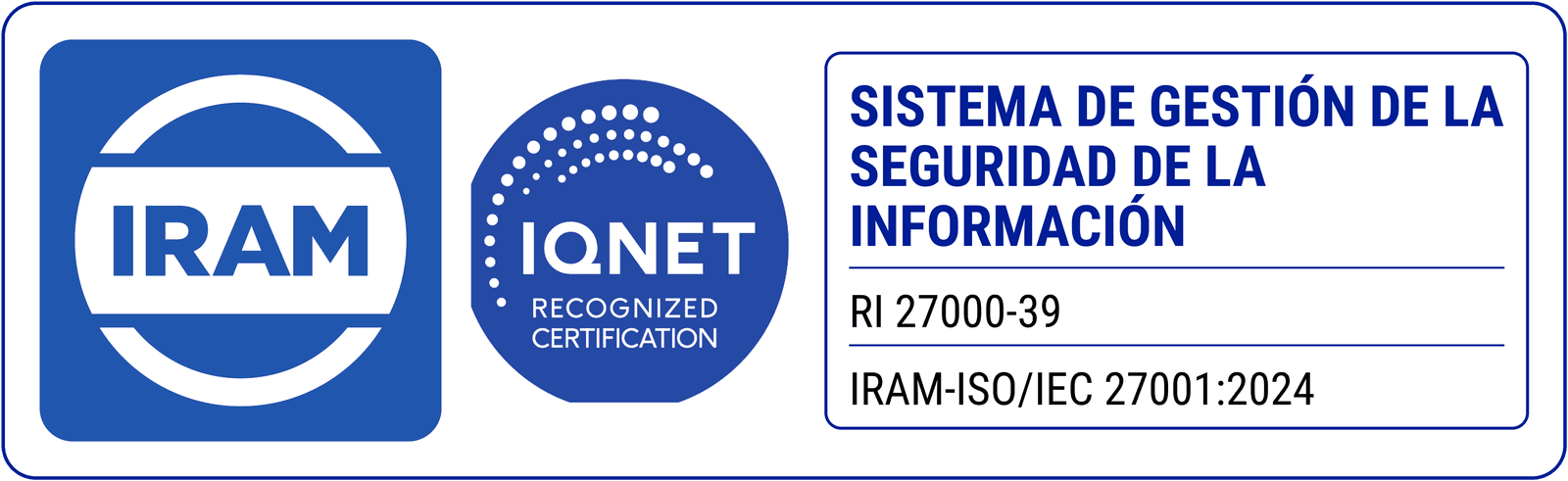
ISO/IEC 27001:2022
Certified (IRAM / IQNet): information security management.
ISO/IEC 42001
Controls aligned, certification in progress.
How we work
Phases 4 and 5 · Go-live and evolution
Go live carefully, then keep improving
04Go-live
- Staged rollout
- Monitoring dashboards
- Infrastructure as code
- Rollback plan
05Evolution
- Support
- Continuous improvements in iterations
- Knowledge transfer and documentation
All the code, designs and documentation we produce are yours.
How we work
Illustrative example
Example: an end-to-end platform in about 8 months
A platform for a local government that integrates sensors and existing systems, with rule-based and AI alerts.
- Discovery with the client's team (Month 1)
- Architecture and first MVP (Month 2–3)
- Iterations every 2 weeks: integrations and features (Month 3–7)
- Go-live and handover to operations (Month 8)
- Quality and security (Month 1–8)
A generic example, not a client. Actual timelines are agreed at the end of the discovery.
How we work
Typical timelines
From 4 weeks to 12 months, depending on scope
Usual ranges by type of project.
- MVPs and proofs of concept
- 4–8 weeks
- Production launch
- 3–6 months
- Complex platforms
- 6–12 months
These are reference ranges: each project's timeline comes out of the discovery.
How we work
Engagement models
Four ways to work together
Fixed-scope project
- Team
- 2–6 engineers
- Duration
- 2–6 months
- Best for
- MVPs, proofs of concept and migrations.
Dedicated team
- Team
- 3–12 engineers
- Duration
- 6+ months
- Best for
- Products that evolve continuously.
Time and materials
- Team
- 1–8 engineers
- Duration
- Month to month
- Best for
- Priorities adjusted sprint by sprint.
Staff augmentation
- Team
- 1–4 specialists
- Duration
- 3+ months
- Best for
- Adding specific profiles to your team.
We can start in 2–4 weeks.
How we work
Results
What has already come out of this process
Solutions built this way.
Shelter
Gets value to anyone, with no bank or smartphone, and every delivery is visible in real time. Pilots in Peru, Kenya and Venezuela.
1,185+ beneficiaries reached · USD 15,000+ distributed in aid
See Shelter →Verifiable Policy Registry
Accountable content filtering for school connectivity.
Research prototype (v0.6.0): contracts not audited, no public deployment.
See VPR →Provenance and impact certification
Renewable energy tokenization with EPEC.
See the solution →Primero DAO and QuarkID
The governance DAO for Primero, UNICEF's digital public good, and self-sovereign identity with QuarkID, certified as a digital public good.
See consulting →Xcapit Wallet with UNICEF
A non-custodial wallet developed with UNICEF's support.
4M+ people reached with the wallet built with UNICEF · 167+ countries with users
See track record →ISO/IEC 27001
Certified information security (IRAM / IQNet).
See track record →
Since 2018 · 30+ engineers, designers and strategists · Córdoba · Lima · Miami
How we work
How we start
What we need from your team
To start well
- 01One point person with decision-making authority
- 02Access to users and to current processes
- 03Clarity on the success indicators
- 04A focused first version, expanded in stages
The first step
A 2–4 week discovery
At the end you have the scope, the risk map, the reference architecture, the roadmap, the timeline and the estimate, and you decide whether to go ahead.

How we work
Let's start with a 2–4 week discovery
Tell us what you want to solve and we'll propose how to start.
Write to us at hola@xcapit.com
calendly.com/jose-xcapit/30min
Xcapit INC (USA) · CryptoLab S.A.S. (Argentina) · Xcapit SAC (Peru) · Córdoba · Lima · Miami